
Two coffee cocktails walk into a bar. One arrives chilled, frothy, and buzzing with real espresso. The other is smooth, creamy, and laid-back on the rocks. If you’ve been debating espresso martini vs. white russian, you’re in good company. Boston cocktail fans order both by the round, and each drink has its loyal crowd. In this post, we cover what sets these two classics apart, how they stack up on flavor, caffeine, and calories, and which one deserves a spot in your hand tonight.
What Is an Espresso Martini?
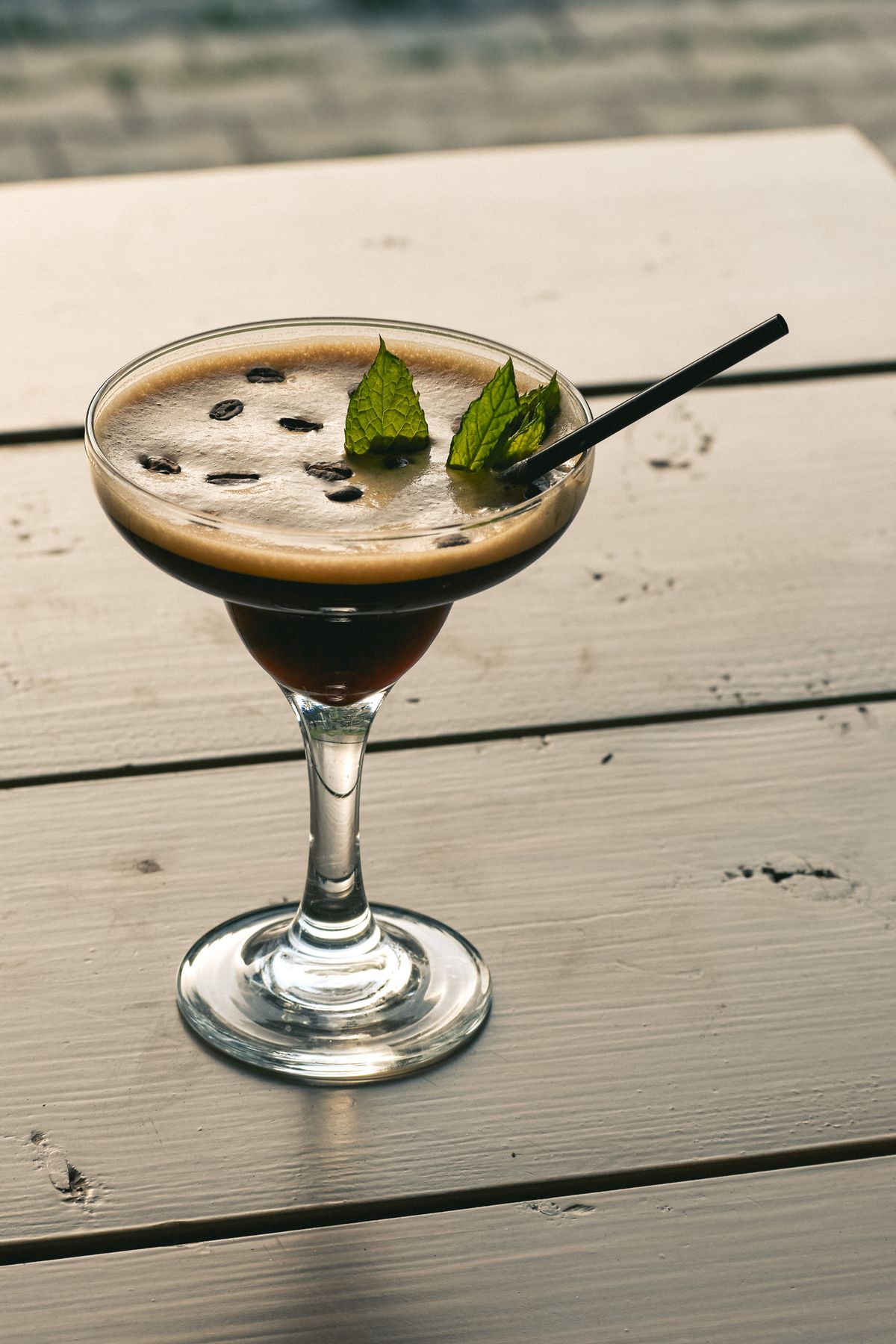
An espresso martini is a shaken cocktail made from vodka, coffee liqueur, and freshly pulled espresso, served in a chilled martini glass with a frothy foam top.
London bartender Dick Bradsell invented the drink in 1983 at The Soho Brasserie. A customer asked him for something that would “wake me up and mess me up.” Bradsell grabbed vodka, coffee liqueur, and a fresh shot of espresso. He shook them hard over ice and strained everything into a martini glass. The vigorous shaking trapped air bubbles from the espresso crema, creating that iconic foam crown.
The three core ingredients are vodka, coffee liqueur (most often Kahlúa), and a fresh espresso shot. Some recipes add a splash of simple syrup for sweetness. What makes the espresso martini unique is that real espresso. Without it, you don’t get the foam, the depth of flavor, or the caffeine kick that defines the drink.
See what’s in an espresso martini for a full ingredient breakdown, including which coffee liqueurs work best.
What Is a White Russian?
A White Russian is a three-ingredient cocktail built in a rocks glass over ice: vodka, coffee liqueur, and heavy cream or milk layered on top.
You don’t shake a White Russian. Build it directly in the glass instead. Pour the vodka and Kahlúa over ice. Then add the cream slowly over the back of a spoon so it floats on top. The result is a visually layered drink where the cream swirls down into the coffee base as you sip. Despite the name, the cocktail has no connection to Russia. Bartenders most likely coined it as a riff on the “Black Russian,” which is the same drink without the cream.
The cocktail hit its cultural peak in the late 1990s. Bartenders credit Jeff Bridges’ character “The Dude” in “The Big Lebowski” for turning it into a cult classic. Since then, it’s held a steady spot on menus as a go-to comfort drink, especially after dinner. Want something lighter? Swap the heavy cream for oat milk or half-and-half. You keep the layered look with fewer calories.
The ABV typically sits around 20-24%, similar to an espresso martini. But the real difference lies in texture and intent. Where the espresso martini energizes, the White Russian relaxes.
Espresso Martini vs. White Russian: Head-to-Head
Both cocktails share the same base: vodka and coffee liqueur. But they split sharply on caffeine, texture, serving style, and calorie count.
| Espresso Martini | White Russian | |
|---|---|---|
| Base spirits | Vodka + coffee liqueur | Vodka + coffee liqueur |
| Third ingredient | Fresh espresso | Heavy cream |
| Serving style | Martini glass, shaken, foam top | Rocks glass, built over ice, cream float |
| Texture | Light and frothy | Thick and creamy |
| Caffeine (approx.) | 40-75mg (from espresso) | Under 10mg (from liqueur only) |
| Sweetness | Medium | Medium-high |
| ABV (approx.) | 20-25% | 20-24% |
| Calories (approx.) | 180-220 kcal | 300-400 kcal |
The caffeine gap is the starkest difference between these two drinks. Real espresso delivers 40-75mg per shot, enough to keep you sharp through a long dinner. Coffee liqueurs like Kahlúa carry only trace amounts, so the White Russian tastes like coffee but won’t give you any of its energy. For a full breakdown, see how much caffeine is in an espresso martini.
Which Cocktail Should You Order?
Choose the espresso martini if you want energy and lightness; choose the White Russian if you want richness and a slow, satisfying sip.
Think about the moment, not just the flavor. Here’s how each drink fits different situations:
- Order the espresso martini at a cocktail hour, dinner party, or any night you plan to stay out late. The caffeine helps you stay sharp, and the foam-topped presentation commands attention without saying a word.
- Order the White Russian as an after-dinner drink or dessert substitute when you want something warming and indulgent. It pairs well with chocolate, tiramisu, or anything coffee-flavored on the dessert menu.
- Hosting a group? The espresso martini scales better. A bottled version means no shaker, no mess, and consistent quality for every pour. The White Russian needs fresh cream and individual builds, which slows things down.
Vodka choice shapes both drinks more than most people expect. A neutral vodka lets the coffee flavors lead. A softer, wheat-based vodka smooths out the bitterness in the espresso martini and rounds the cream in a White Russian. See how different vodkas change your espresso martini for a breakdown that applies to both drinks.
Food pairings differ too. The espresso martini’s bitterness cuts through rich or fatty dishes and works well alongside savory bar snacks and charcuterie. The White Russian is a dessert drink. Pair it after the meal, not during.
Two Great Cocktails. One Easy Choice for Your Night.
The espresso martini and the White Russian both earn their place behind the bar. But if you want energy, fewer calories, and a cocktail that looks as good as it tastes, the espresso martini takes it. Boston’s own DrinkThat by Bricco makes the decision even easier. Pick up a bottle, skip the shaker, and pour something worth drinking.
Ready to taste the real thing? Find DrinkThat near you, or call 617-955-9590.
