
Espresso Martini History: From London Bar to Viral Hit
The espresso martini has one of the clearest origin stories in cocktail history. Dick Bradsell created it in London in the early 1980s, on the spot, with whatever was behind the bar. That single improvised drink shaped cocktail culture for decades. For Boston drinkers, there’s a local chapter to this story: DrinkThat’s team spent more than 20 years perfecting this cocktail at Bricco before they bottled it. In this post, we cover who invented it, why it went viral, and how the recipe has changed.
Who Invented the Espresso Martini?
Dick Bradsell invented the espresso martini in London in the early 1980s. He was working at a bar when a young woman sat at his counter. She wanted something to wake her up and keep her going. There was an espresso machine nearby. He combined fresh espresso, vodka, coffee liqueur, and sugar syrup, shook it hard, and strained it into a chilled glass. He called it the Vodka Espresso.
There was no recipe card and no plan. It was a direct response to one customer’s request, built from what was within arm’s reach. Bradsell went on to become one of the defining bartenders of his generation. His work in 1980s London helped reshape British bar culture at a time when cocktail craft wasn’t taken seriously. He died in 2016, but the drink he improvised lives on. The espresso martini now outsells most of what shared the back bar with it.
The DrinkThat Espresso Martini is built on the same principles Bradsell worked from: real espresso, clean spirit, and a finish that doesn’t overstay its welcome.
How Did the Espresso Martini Travel from London to the World?
The cocktail spread bar by bar through London’s scene first, then moved city by city as the decade turned. Bartenders renamed it the Espresso Martini in the 1990s, even though it has no vermouth and doesn’t qualify as a classic martini. The V-shaped glass sealed the name. A 1990s trend of calling anything served in that glass a martini made the label stick, and nobody changed it after that.
By the 2000s, upscale bars across the UK, Australia, and the United States served it regularly. It wasn’t the most-ordered drink in any room, but it held a specific place: sophisticated, slightly indulgent, and reliable whenever guests wanted both elegance and energy at the same time. Our espresso martini recipes show how far the variations have traveled from that original pour.
| Period | Milestone | Impact |
|---|---|---|
| Early 1980s | Dick Bradsell creates the Vodka Espresso in London | The cocktail is born |
| 1990s | Renamed the Espresso Martini; spreads to upscale bars | Brand identity forms |
| 2000s | Appears on menus across UK, Australia, and the US | Steady global presence |
| 2020–2021 | TikTok cocktail content surges during lockdowns | Search interest spikes sharply |
| 2022 | CGA data names it the most-ordered cocktail in the UK | Mainstream peak demand |
| 2023–now | Bottled and canned formats drive retail growth | Category moves into home consumption |
Why Did TikTok Make the Espresso Martini Go Viral?
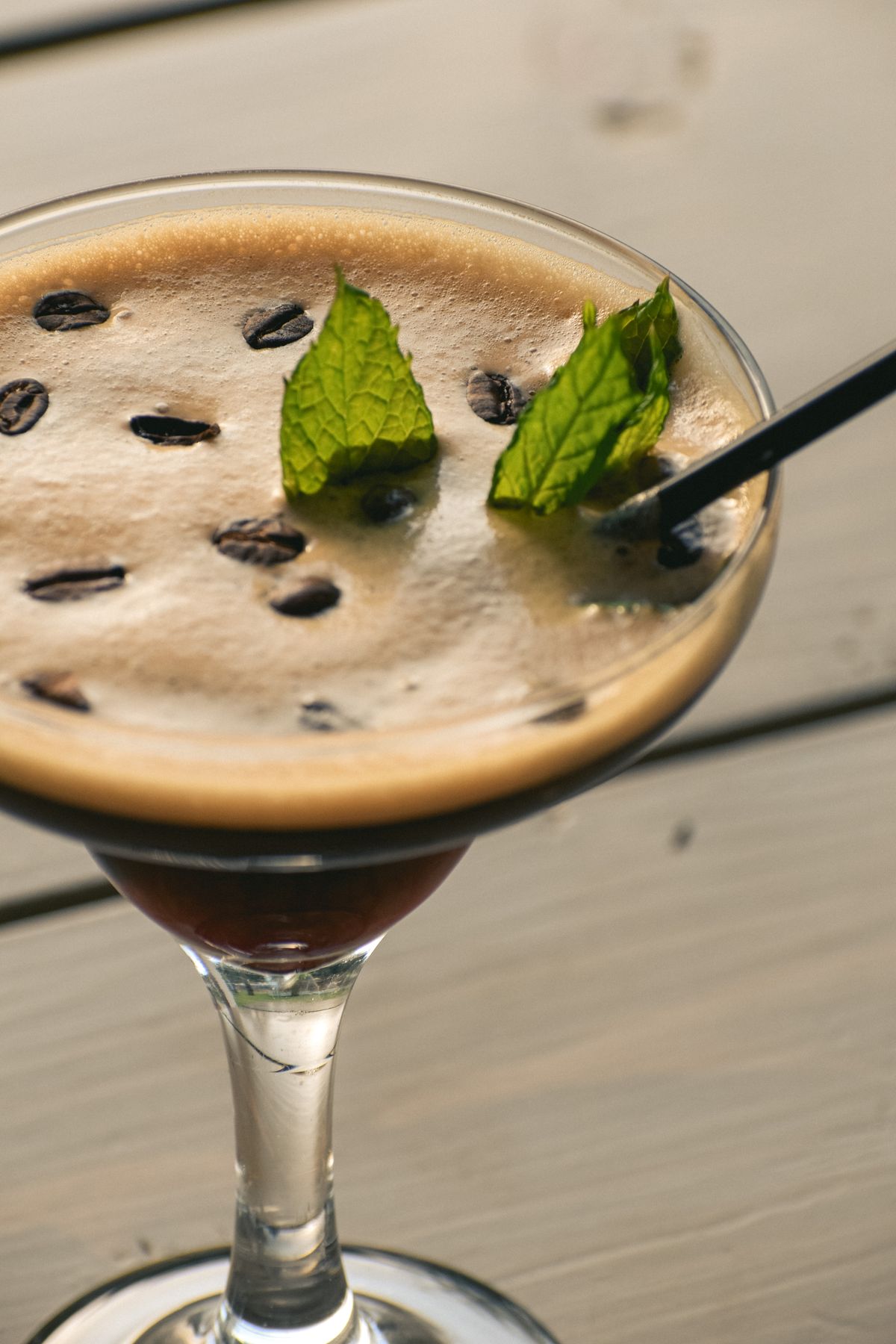
TikTok made it go viral because it’s one of the most satisfying cocktails to watch someone make. The hard shake builds tension. The pour reveals a dark, glossy liquid. Then a thick layer of crema settles on top, and three coffee beans land in the center. That sequence gives short-form video a clean payoff in under 15 seconds.
The timing hit just right. Millions of people deepened their interest in specialty coffee during 2020 and 2021. They learned about extraction, roast profiles, and crema. When the espresso martini showed up in their feeds, it felt like a natural extension of something they already cared about. Search interest in espresso martini recipes reached record highs in 2022. That same year, Bacardi’s Cocktail Trends Report ranked it among the top five most-ordered cocktails globally.
The viral wave also exposed a gap. Most people who tried making one at home couldn’t get the foam right. A proper espresso martini needs a fresh shot, not cold brew or instant. Without the right setup, the crema never forms. That’s exactly where a well-made bottled product earns its spot. Our homemade vs. bottled espresso martini guide breaks down the difference.
How Has the Espresso Martini Recipe Changed Over the Years?
The recipe started as a three-ingredient improvisation and grew into a precision cocktail with dozens of documented variations. Bradsell’s original used whatever was available: standard vodka, a coffee liqueur, fresh espresso, and sugar syrup. Today, each of those choices involves deliberate decisions.
Coffee quality drives the biggest shift. The specialty coffee movement taught drinkers to care about origin, roast level, and extraction. That sensibility moved into cocktail culture, too. Single-origin espresso, different roast profiles, and varying extraction times all produce noticeably different results in the glass. Sweetness has shifted, too: earlier versions ran sweeter, while contemporary recipes run drier and let the espresso lead.
Bottling added another challenge entirely. Keeping foam, freshness, and flavor stable in a shelf-stable format takes serious formulation work. DrinkThat took that on after more than two decades at Bricco, building a recipe around seven premium ingredients: real espresso, coffee, hazelnut, vanilla, and cacao. Find a bottle near you and taste what that precision produces.

DrinkThat Brings the Espresso Martini’s Legacy to Boston
Dick Bradsell built this drink from instinct in a London bar four decades ago. It traveled quietly through cocktail culture for years, then found a second audience on social media that introduced it to an entirely new generation. Boston has been part of this story for more than 20 years. DrinkThat puts that history in a bottle, with the same real espresso and precise balance that made the original worth keeping.
Try a piece of cocktail history for yourself. Find DrinkThat at a store near you, or call us at 617-955-9590.
